


Electric Cargo Ships: The Green Pioneers of Ocean Shipping
2026-02-24


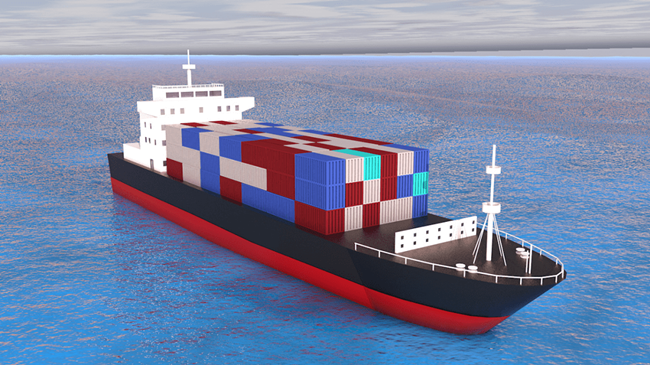
As the global shipping industry stands at the crossroads of carbon neutrality, electric cargo ships are reshaping the future of maritime transport with their revolutionary potential. From inland rivers to coastal waters, and from short-haul routes to medium-distance voyages, these vessels are gradually overcoming technical barriers in range and power, expanding their horizons into the vast blue realm. This article explores the feasibility of electric cargo ships as seagoing vessels from four dimensions—hull design, propulsion systems, endurance capabilities, and operational routes—showcasing their potential to become the mainstay of future ocean shipping.
1. Hull Design: Lightweight and Modular, Adapting to Complex Sea Conditions
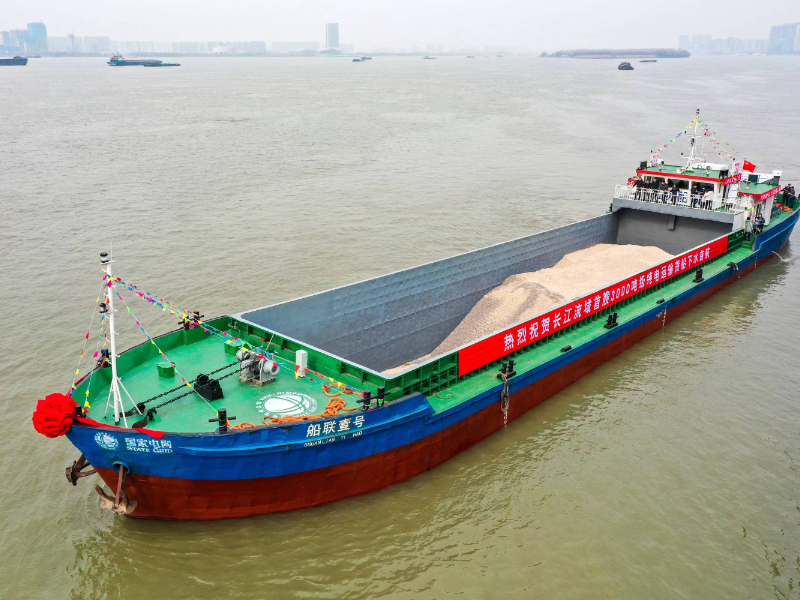
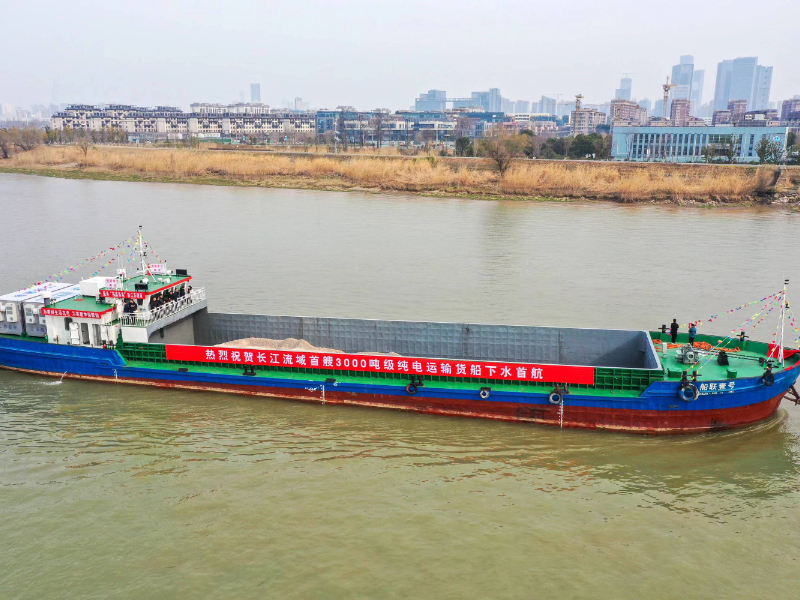
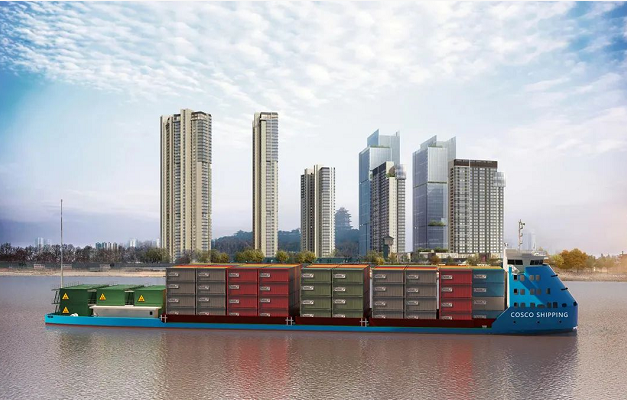
The hull design of electric cargo ships balances cost-efficiency with adaptability. Take the Gezhouba, a 129.9-meter-long, 22-meter-wide vessel operating on the Yangtze River, as an example. Its lightweight materials and topological optimization reduce steel weight significantly, while modular containerized lithium-ion battery packs maximize cargo space without compromising load capacity. This design lowers energy consumption and enhances stability in rough seas, laying the groundwork for coastal navigation.
A more groundbreaking innovation is seen in the Huaihe 001, a methanol-electric cargo ship slated for launch in 2026. Its mast, crafted from aluminum alloy/carbon fiber composites, weighs just one-third of traditional steel structures and features a hydraulic folding mechanism that retracts in under two minutes. This solves the space conflict of conventional wind-assisted propulsion systems. Paired with AI-driven sail angle optimization, the ship generates over 60% of its propulsion power in Force 4 winds, offering a hybrid "wind-electric" solution for coastal voyages.
2. Propulsion Systems: Dual-Energy Synergy and Smart Management Break Range Barriers
The core competitiveness of electric cargo ships lies in their propulsion innovations. The 2,000-ton all-electric self-unloading vessel launched in Guangzhou’s Nansha District employs a "lithium-ion battery + supercapacitor" dual-energy system. Supercapacitors handle instantaneous high-power demands during acceleration or steering, while lithium batteries provide sustained energy for steady cruising. An intelligent Energy Management System (EMS) enables closed-loop energy recycling: when braking or reversing, kinetic energy is converted into electricity to recharge supercapacitors.
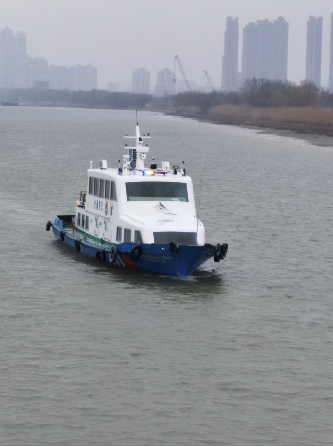
In hybrid systems, Fujian’s series-hybrid tugboat, equipped with three diesel generators and 1,860 kW dual L-type azimuth thrusters, uses lithium batteries as auxiliary power. In port operations, it switches to zero-emission electric mode for silent navigation; during open-sea voyages, diesel generators and batteries work in tandem to meet power needs while reducing fuel consumption. This "oil-electric complementarity" model provides a transitional solution for electric ships to extend into medium-range maritime transport.
3. Endurance Capabilities: Battery Swapping and Methanol Fuel Unlock Long-Haul Potential
Range anxiety, once the biggest hurdle for electric maritime vessels, is being overcome through technological breakthroughs. China’s first 10,000-ton all-electric bulk carrier on the Yangtze River adopts a "port-side battery swapping" model. With 12 containerized mobile power units totaling 24,000 kWh, it achieves a 500-km range per swap and completes battery replacements in under 20 minutes. This "plug-and-play" refueling method minimizes downtime, matching the operational efficiency of traditional fuel ships on fixed routes.
A more revolutionary solution comes from methanol-electric technology. The Yuanchun 001, unveiled at Huzhou’s 2026 demonstration, boasts a 1,500-km range—four times that of pure-electric ships—thanks to Hanma Technology’s methanol-electric system. Methanol’s high energy density and renewability are key: it can be synthesized from green hydrogen and CO₂, enabling a "negative carbon" cycle. When paired with battery systems, the ship reduces energy costs by 42% compared to diesel and 11.5% versus pure-electric alternatives. Over 60 methanol-electric cargo ships are now under construction or in operation across China, covering coastal routes in the Greater Bay Area and Hangzhou-Ningbo Canal, proving their scalability.
4. Operational Routes: From Inland Rivers to Coastal Waters, Expanding the Blue Frontier
Electric cargo ships follow a "stepwise expansion" strategy for route planning. In inland waters, the Yangtze and Pearl River basins have become hubs for large-scale electric ship adoption. The Xiangjiang Green Power 001 features an 88-meter lock-friendly design, making it the largest pure-electric container ship by capacity in China, while the Hetun Weilan 01 achieves a 500-km range tailored for bulk cargo transport on the Yangtze.
On coastal routes, electric ships are transitioning from supporting roles to primary operators. The Greater Bay Area’s first methanol-electric container ships mark their entry into cross-sea transport, while Nordic and Southeast Asian regions explore zero-carbon routes using "smart sail + electric propulsion" hybrids, leveraging abundant wind resources. With advancements in solid-state batteries and hydrogen fuel cells, electric ships’ ranges could soon exceed 2,000 km, enabling true deep-sea navigation.
Conclusion: Electric Cargo Ships—The Vanguard of a Zero-Carbon Ocean Future
From tranquil river voyages to bold coastal expeditions, electric cargo ships are steering maritime transport toward sustainability with technological innovation and green vision. They are not just tools for decarbonizing the shipping industry but catalysts for redefining global logistics networks. As each electric vessel glides across the waves, it leaves behind not just a zero-emission wake but a industry’s pledge to a sustainable future.
Choose electric cargo ships—choose to sail with tomorrow. Together, let us witness how clean energy rewrites the narrative of ocean shipping, one eco-friendly voyage at a time.
没有了!
Next
Contact Us
Email:
13813981680@139.com
Tel:
+86-17602544555
Address:
Building T1, Tianjijiang Lai-T1, Pukou District, Nanjing City