


Electric Cargo Vessels’ Battery Swap Model: A Green Revolution and Efficiency Leap for Golden Waterways
2026-03-13


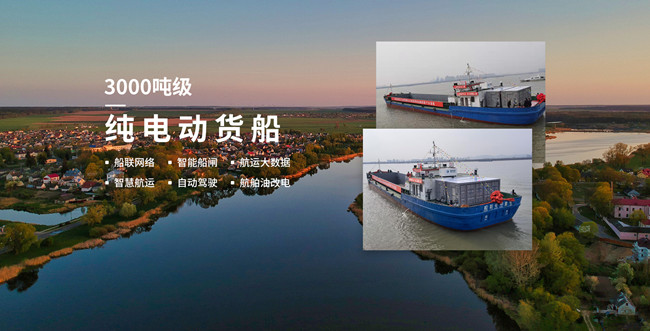
As waves gently lap against the hulls of electric cargo vessels gliding along the Yangtze River, these silent “green giants” stand in stark contrast to the roar and black smoke of traditional fuel-powered ships. Powered by electricity and fueled by an innovative battery swap model, they are redefining the future of inland waterway transportation. From technological breakthroughs to commercial applications, from policy support to ecosystem restructuring, the battery swap model for electric cargo vessels is driving an irreversible transformation in energy, economics, and environmental sustainability.
1. Technological Breakthroughs: From “Range Anxiety” to “Infinite Endurance”
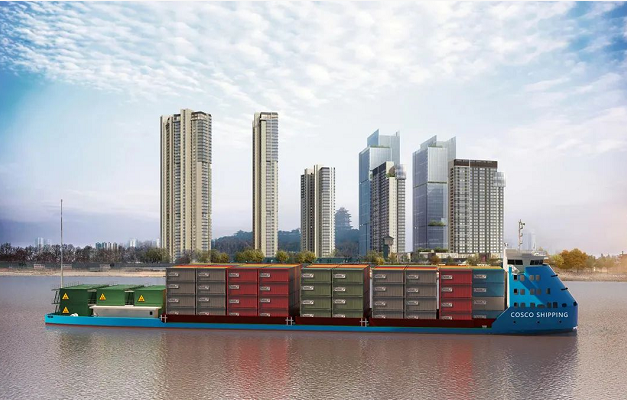
The battery swap model for electric cargo vessels modularizes and standardizes ship battery systems, enabling rapid battery replacement for energy replenishment. This approach directly addresses the core challenge of electric shipping—limited range. Take the COSCO Shipping Green Water 01, the world’s first 700 TEU all-electric container ship, as an example. Equipped with 36 mobile containerized lithium iron phosphate batteries totaling 50,000 kWh (equivalent to the battery capacity of 800 electric passenger cars), it operates on a dual strategy of “battery swapping + fast charging.” On the Nanjing Port-Shanghai Yangshan Port route, it completes the outbound journey without swapping and the return trip with just one 10-minute battery swap at Nantong Tonghai Terminal—20 times faster than traditional charging.
Technological innovation extends to safety and intelligence. The distributed DC power distribution system developed by Hubei Donghu Laboratory integrates power distribution, transformation, and management, enabling intelligent energy scheduling. Battery packs feature “A-60” fire-resistant partitions, heptafluoropropane fire suppression systems, and air-cooling temperature control, preventing fire spread even during internal combustion. The intelligent Battery Management System (BMS) monitors voltage, current, and temperature in real time, linking with mobile apps and cloud platforms for traceable, predictable battery health management.
2. Economic Viability: From “High Costs” to “Full-Cycle Profitability”
The battery swap model reshapes not just technology but also economic logic. On the Wuhan-Shanghai route, a 700 TEU electric container ship consumes 145,000 kWh per round trip. At an electricity price of ¥1.45/kWh, energy costs total ¥210,000. In contrast, a diesel-powered vessel of the same type burns 28 tons of fuel per trip, costing ¥240,000 at ¥7,450/ton—saving ¥30,000 per voyage. Factor in off-peak electricity rates and green route subsidies, and the advantage becomes even more pronounced.
Operational cost reductions are even more significant across the lifecycle. Electric vessels boast 40% lower maintenance expenses due to stable electrical components and 30% reduced labor costs through intelligent auxiliary driving systems that minimize crew requirements. The “vessel-battery separation” model allows shipowners to lease batteries, slashing initial investment and accelerating ROI. For instance, the Jiangyuan Lily employs box-type batteries invested in and operated by third parties, enabling shipowners to enjoy zero-emission operations without bearing battery depreciation or charging infrastructure costs.
3. Policy and Market Synergy: From “Single-Point Breakthroughs” to “Ecosystem-Wide Wins”
The rise of electric cargo vessel battery swapping is fueled by dual drivers: policy and market. China’s “Dual Carbon” strategy and “Yangtze River Protection” initiative provide top-down support, while local subsidies and tax incentives directly reduce transition costs. By 2025, new energy vessel subsidies doubled, and ports building charging/swapping stations received preferential land and power quotas, creating a virtuous cycle of “policy-enterprise-user” collaboration.
Market adoption is expanding from inland to coastal waters. Chery Group’s Porpoise Azure 02 electric container ship uses six standardized battery packs replaceable in 5 minutes via mechanical arms, boosting cargo capacity by 30%. By integrating “cargo-vessel-vehicle-storage” resources, it flexibly deploys battery assets across logistics chains, closing the loop between manufacturing, operations, and infrastructure. In Europe, the Dutch Alphenaar inland electric cargo ship achieves 15-minute battery swaps, cutting annual CO₂ emissions by 1,000 tons—a global benchmark for green shipping.
4. Future Vision: From “Golden Waterways” to “Zero-Carbon Horizons”
The ultimate goal of the battery swap model is to build a zero-carbon ecosystem spanning energy production, storage, transportation, and consumption. Huadian Yangluo Charging/Swapping Station, a national “vehicle-vessel-grid interaction” pilot, not only provides battery swaps but also integrates ship batteries into grid peak shaving: charging during low-demand periods and discharging to the grid during peaks, functioning as a “virtual power plant.” This “vessel-storage-grid” synergy resolves renewable energy intermittency while generating additional revenue for shipowners, transforming shipping from an energy consumer to an energy participant.
By 2026, over 1,000 new energy vessels—including inland cargo ships, passenger ferries, and engineering boats—will operate across China. As battery energy density rises and swapping networks expand, electric cargo vessels’ range will leap from 300 km to 1,000 km, enabling “river-to-sea” zero-carbon transport. When every vessel becomes a mobile green energy node and every route a zero-carbon logistics corridor, the battery swap model will redefine China’s inland shipping logic, offering a “Chinese solution” for global transport decarbonization.
Conclusion
From soot to breeze, from noise to silence, the battery swap model for electric cargo vessels represents far more than an energy substitution—it is a holistic revolution in efficiency, cost, and sustainability. When technological breakthroughs align with commercial innovation, and policy guidance meets market demand, we can confidently envision a future where golden waterways shine brighter with electric vessels, and global shipping grows greener through Chinese ingenuity.
Contact Us
Email:
13813981680@139.com
Tel:
+86-17602544555
Address:
Building T1, Tianjijiang Lai-T1, Pukou District, Nanjing City