


The Strait of Hormuz: The "Throat" and Epicenter of Global Shipping
2026-03-10


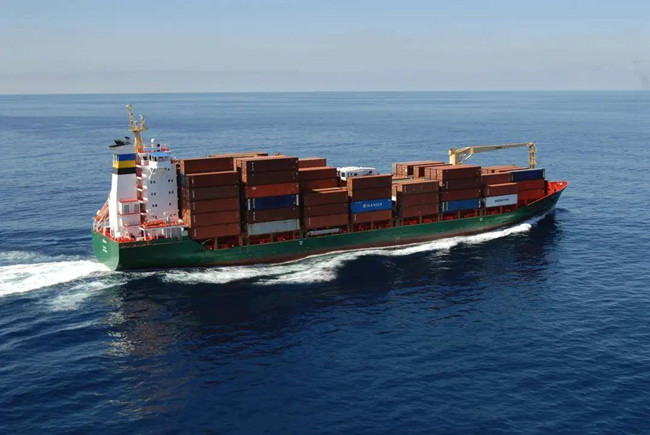
As the waves of the Persian Gulf crash against the reefs of the Strait of Hormuz, this narrow 48-kilometer waterway has become a turning point for the fate of global shipping. Serving as the "golden channel" connecting the Persian Gulf to the Gulf of Oman, the strait handles 20 million barrels of oil daily—20% of global seaborne oil trade—and accounts for 20% of Qatar’s liquefied natural gas (LNG) exports. Yet, in March 2026, Iran’s announcement to close this strategic chokepoint plunged the global shipping industry into an unprecedented storm: oil tankers halted, routes redrawn, costs soaring, and geopolitical crises looming. A high-stakes博弈 (game of chess) over energy lifelines and economic arteries has begun.
Route Disruptions: The "Suffocation Moment" of Global Energy Transport
The closure of the Strait of Hormuz is akin to strangling the global energy supply chain. Oil exports from Saudi Arabia, Iraq, and the UAE have ground to a halt, while Qatar’s LNG carriers linger outside the strait, unable to proceed. The International Energy Agency (IEA) warns that if the blockade persists, Gulf oil producers will be forced to cut production within 25 days due to depleted storage capacity, triggering a tangible global oil shortage.
Container and tanker traffic has plummeted: On March 5, data showed container ship passages dropped from 10–30 daily to just 3, oil tankers from 20–40 to 2, and dry bulk carriers to a mere 2. Shipping giants like Mediterranean Shipping Company (MSC) and Maersk urgently redirected vessels around the Cape of Good Hope, avoiding the dual risks of the Suez Canal and Hormuz. However, the detour adds 30% to voyage distances, causing delays and port congestion while fueling freight rate hikes.
Cost Explosion: The "Darkest Hour" for Shipping
The ripple effects of the closure have rapidly escalated costs. Insurance premiums led the charge: The International Group of P&I Clubs (IG Club) revoked war risk coverage for the Persian Gulf and Hormuz, forcing shipowners to pay multiples of previous premiums for alternative protection. A very large crude carrier (VLCC) now faces daily war risk premiums soaring from thousands to tens of thousands of dollars, with some routes’ insurance costs exceeding freight revenue itself.
Fuel expenses further compound the crisis. The detour around the Cape of Good Hope increases fuel consumption by 40%, while low-sulfur fuel oil (VLSFO) prices surged past 700pertonamidsupplyshortages,squeezingshippingprofits.JPMorganestimatesthatprolongedconflictcouldaddover20 billion in annual costs to the global shipping industry, pushing smaller carriers toward bankruptcy.
Geopolitical Crisis: The "Sword of Damocles" Hanging Over Shipping Safety
The strait’s closure is not merely an economic issue but a geopolitical powder keg. Iran’s military claims to enforce "smart control" over the waterway, deploying drones, sensors, and data networks to create a "maritime digital fortress." Any unauthorized vessel risks attack. On March 7, the commercial tanker Prima ignored warnings and attempted passage, only to be struck by an Iranian drone, igniting a fireball that lit up the Persian Gulf night.
The U.S. and Israel responded by bolstering military presence, with aircraft carriers entering the gulf and fighter jets patrolling the skies. Shipping companies now equip crews with bulletproof vests and satellite phones, while some shipowners refuse Middle East routes altogether. The UN Security Council convened emergency sessions, urging restraint, but the spark of conflict has already ignited—global shipping has become a "hostage" to geopolitical brinkmanship, where a single miscalculation could escalate into a broader war.
Restructuring and Transformation: The "Path to Breakthrough" for Shipping
Faced with Hormuz’s long-term uncertainty, the global shipping industry is accelerating its transformation. Saudi Arabia and the UAE are fast-tracking pipeline projects to bypass the strait: Saudi Arabia’s East-West Pipeline can transport 5 million barrels daily, the UAE’s Fujairah Pipeline 1.5 million, and Qatar’s Goreh-Jask Pipeline is expanding. However, these alternatives cover just 3.5 million barrels/day—far short of the strait’s capacity.
Technological innovation has become critical. Companies are investing in smart shipping systems, leveraging blockchain for route optimization to reduce reliance on single chokepoints. The adoption of LNG-powered vessels and wind-assisted ships aims to mitigate fuel cost volatility. Meanwhile, global energy trade patterns are quietly reshaping: Europe is diversifying away from Middle East oil toward U.S. shale and North Sea crude, while Asian nations bolster strategic petroleum reserves to brace for supply shocks.
Conclusion: Navigating Through the Storm
The closure of the Strait of Hormuz represents a global crisis spanning energy, economics, and geopolitics. For shipping, it is both a challenge and a catalyst for transformation. As tankers rock in the waves off the Cape of Good Hope and container ships queue outside the Suez Canal, the industry’s resilience and innovation are forging a new chapter.
In this war without smoke, only vigilance, accelerated transformation, and deeper cooperation can steady the course. The waves of Hormuz will eventually calm, but the future of global shipping has already been rewritten in the crucible of this crisis.
Contact Us
Email:
13813981680@139.com
Tel:
+86-17602544555
Address:
Building T1, Tianjijiang Lai-T1, Pukou District, Nanjing City