


Electric Cargo Ships :Navigating New Horizons Amid the Global New Energy Surge
2026-02-10


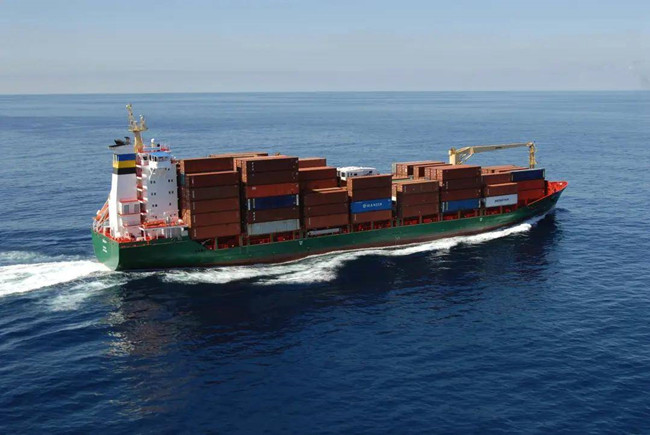
As the melting Arctic ice sounds the alarm for climate crises and the pulse of global trade accelerates amid energy transformation, electric cargo ships are setting sail toward a deep-blue revolution in the shipping industry with their zero-emission profile. The rapid advancement of global new energy is not only injecting momentum into technological breakthroughs for electric cargo ships but also shaping a landscape of opportunities and challenges intertwined with policy, market, and ecological dynamics.
Opportunities: Pioneers in the Green Tidal Wave
Policy Tailwinds: Mandatory Transitions Driven by Global Decarbonization Goals
From the EU’s “Fit for 55” climate legislation to China’s dual-carbon strategy, major economies worldwide are legislating to decarbonize the shipping sector. Norway mandates zero-carbon emissions for fjord cruise ships by 2032, China’s Action Plan for Green Development of the Shipbuilding Industry targets a 30% share of electric vessels by 2030, and the U.S. aims to slash domestic maritime greenhouse gas emissions by 75% by 2035. These policies not only set market entry thresholds for electric cargo ships but also reduce transition costs through subsidies and tax incentives. For instance, China offers subsidies of RMB 1,500–2,000 per ton for new energy vessels, directly propelling the inland electric cargo ship fleet to over 1,800 units. Annual electricity consumption by new energy vessels on the Yangtze River now exceeds 190 million kWh, equivalent to cutting diesel use by 57,000 tons.
Technological Leapfrogging: Revolutionary Breakthroughs in Batteries and Energy Systems
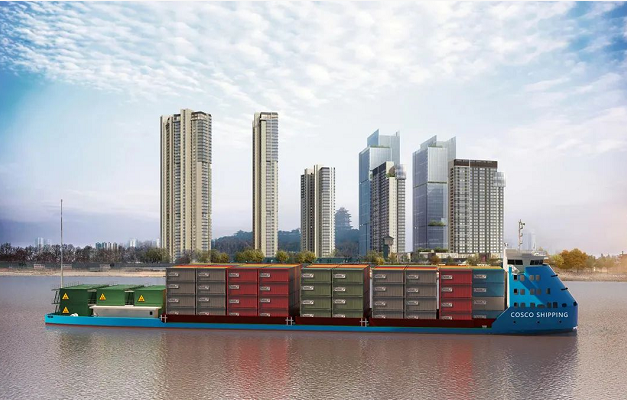
New energy advancements are reshaping the core competitiveness of electric cargo ships. CATL’s “EnerC” marine battery system achieves an energy density of 160 Wh/kg with 15-minute fast charging, while EVE Energy’s full-time active balancing BMS extends battery lifespan to 12 years, covering a vessel’s entire lifecycle. Solid-state battery research is entering engineering stages, with energy density expected to surpass 300 Wh/kg by 2028, enabling 5,000-ton cargo ships to exceed 1,000 km in range. Hydrogen fuel cells and methanol propulsion are also breaking through, offering zero-carbon solutions for ocean freight—the world’s first river-to-sea pure electric container ship, COSCO Shipping Greenwater 01, now operates between Nanjing and Yangshan Port, cutting annual CO₂ emissions by over 20,000 tons.
Market Explosion: Scaling Benefits in Short-Haul Freight and Niche Scenarios
Demand for electric cargo ships is shifting from pilot projects to mass adoption. Inland short-haul freight, enclosed waterway operations, and harbor tugs—with their fixed routes, short distances, and convenient refueling—are prime candidates for electrification. By 2025, China’s electric cargo ship market is projected to reach RMB 55 billion, with inland electric vessel fleets exceeding 1,800 units and a compound annual growth rate (CAGR) of over 24.7%. Globally, electric cargo ship orders account for 75.2% of total newbuilds, with Chinese shipyards securing over 30% of alternative fuel vessel orders using battery-hybrid propulsion. Cultural tourism scenes, such as scenic river cruises and urban water tours, are embracing electric vessels for their silent, emission-free operations, spawning blockbuster models like the Pearl River Prince—which carries over 400,000 passengers annually.
Ecosystem Synergy: Cross-Industry Collaboration Between Automotive and Maritime Supply Chains
The rise of electric cargo ships is attracting deep involvement from the automotive sector. CATL’s “ship-shore-cloud” zero-carbon shipping solution extends its automotive electrification expertise to maritime scenarios, while BYD’s marine blade batteries reduce vessel retrofitting costs through modular design. Huawei Digital Energy’s intelligent energy management systems optimize vessel efficiency by 15%. This cross-industry synergy accelerates technological iteration and lowers battery costs through economies of scale—marine lithium battery shipments surged 80% year-on-year in 2023, with prices dropping 40% since 2020, paving the way for commercialization.
Challenges: Hidden Reefs in the Tidal Wave
Cost Dilemma: Balancing Upfront Investment with Lifecycle Economics
Despite 30% lower operational costs than fuel-powered ships, electric cargo vessels still cost 1.5–2 times more upfront. Batteries account for over 40% of a 5,000-ton pure electric ship’s cost, and full lifecycle requires 2–3 battery replacements, further inflating total ownership costs (TCO). Additionally, inadequate charging infrastructure reduces operational efficiency—fast-charging stations cover less than 30% of inland ports, and battery-swapping standards remain fragmented, leaving vessels idle for hours during refueling and eroding economic benefits.
Technological Bottlenecks: The Triple Challenge of Range, Lifespan, and Extreme Environments
The conflict between battery energy density and freight demands persists. Current lithium iron phosphate batteries offer just 160 Wh/kg, limiting 5,000-ton vessels to under 500 km on a full charge—insufficient for long-haul routes like the upper Yangtze. While ships are designed for 25–30-year lifespans, battery cycles last only 10 years, requiring costly mid-life replacements and complex maintenance. Harsh marine environments—high humidity, salt spray, and intense vibrations—accelerate battery degradation by 8.7% annually, with thermal runaway risks three times higher than on land, demanding stricter safety protocols.
Regulatory Fragmentation: Lagging Global Standards and Industry Coordination
The globalization of electric cargo ships faces “regulatory barriers.” The International Maritime Organization (IMO) lacks unified standards for battery safety, charging interfaces, and data exchange, fragmenting national certification systems and raising export costs. For example, Chinese electric vessels must comply with CCS, DNV, and LR classification rules, while EU ports require CE-certified charging infrastructure, delaying cross-border operations. The absence of a global carbon trading mechanism also prevents quantifying emissions savings, dampening investment enthusiasm.
Future: Sailing Toward a Zero-Carbon Deep Blue
Facing these challenges, the electric cargo ship industry is forging breakthroughs through innovation, business model evolution, and ecosystem collaboration. Next-gen energy storage technologies like solid-state and sodium-ion batteries aim to cut battery costs below RMB 0.3/Wh by 2030, aligning electric cargo ship TCO with conventional vessels. Business models such as battery leasing and vessel-battery separation reduce upfront costs by 40%, shortening payback periods to under five years. Global ports are accelerating “PV-storage-charging-swapping” infrastructure, with inland port fast-charging coverage expected to exceed 80% by 2030 and battery-swapping networks spanning major waterways.
As the Dongxing 100 pure electric cargo ship traces a zero-emission path along the Beijing-Hangzhou Grand Canal and the Yangtze Three Gorges 1 electric passenger vessel carries 1,300 tourists through the Three Gorges, electric cargo ships are no longer futuristic concepts but agents reshaping global shipping ecology in real time. In this new energy-driven green revolution, only by harnessing technological innovation as sails, policy support as oars, and global collaboration as rudders can we navigate toward a sustainable zero-carbon future on the deep blue.
Contact Us
Email:
13813981680@139.com
Tel:
+86-17602544555
Address:
Building T1, Tianjijiang Lai-T1, Pukou District, Nanjing City