


Electric Cargo Ships: A Safe Beacon Sailing Towards the Future
2026-02-12


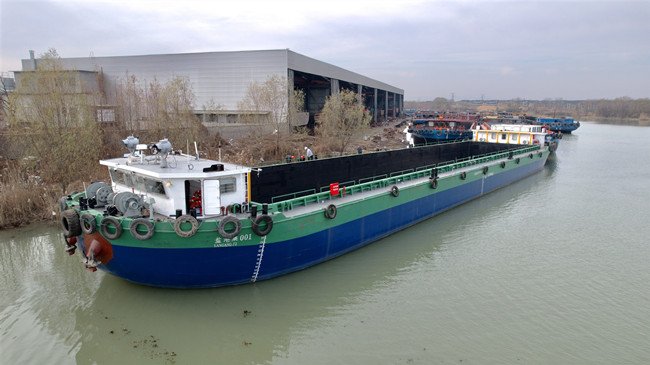
As the wind sweeps across the decks of ships on rivers, lakes, and seas, the roar of diesel engines in traditional cargo ships is gradually being replaced by the quiet hum of electric currents. Electric cargo ships are redefining safety standards in waterborne transportation with their "zero emissions, low noise, and high efficiency." From the golden waterway of the Yangtze River to the core waters of the Huangpu River, and from inland cargo ships to 10,000-TEU container vessels, every departure of an electric cargo ship is inscribing a new chapter in the story of "safety" with technology and craftsmanship.
Power Innovation: A Leap from "Powder Keg" to "Safe Core"
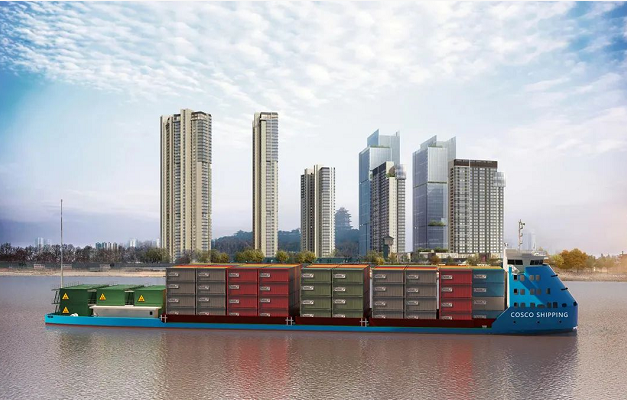
The diesel engines of traditional cargo ships are like "powder kegs," with issues such as fuel leakage, high-temperature ignition, and exhaust emissions long plaguing shipping safety. In contrast, electric cargo ships, powered by lithium batteries, have completely eliminated the safety hazards associated with fuel. Take the "COSCO SHIPPING Green Water 02," the world's largest pure electric container ship with a battery capacity of 57,600 kWh, as an example. Its battery pack not only supports a range of 500 kilometers but also builds an "impregnable fortress" through multiple safety designs:
· Intelligent Thermal Management: The battery compartment is equipped with an independent temperature control system that continuously monitors temperature changes. When the temperature approaches a critical level, it automatically activates liquid cooling circulation or forced ventilation to nip the risk of thermal runaway in the bud.
· Physical Isolation: The battery packs are designed in a containerized manner, independent of the ship's structure. Even if a single battery module fails, it will not trigger a chain reaction.
· Explosion-Proof Certification: The batteries have passed international explosion-proof certifications such as UN38.3 and IEC62660. The outer casings are made of high-strength alloy materials, capable of withstanding extreme conditions like impacts and punctures, ensuring stability even in complex navigation environments.
Fire Protection System: An Upgrade from "Passive Fire Fighting" to "Active Defense"
Fire safety on electric cargo ships is a race against time. Take a 4,000 kWh inland pure electric cargo ship as an example. Its fire protection system constructs a "three-tier defense network":
· Real-time Monitoring: Hundreds of sensors are deployed throughout the ship, covering key areas such as the battery compartment, power distribution room, and engine room. They can accurately detect abnormal signals such as smoke, temperature, and gas concentration, providing 30 minutes of early warning for fire risks.
· Heptafluoropropane Fire Extinguishing: The battery compartment is equipped with a fixed heptafluoropropane fire extinguishing system. Once a fire is detected, the system will release the extinguishing agent within 10 seconds, quickly suppressing the initial fire through both chemical inhibition and physical cooling.
· Emergency Isolation: The battery management system (BMS) is linked to the ship's control system. When a battery fault is detected, it automatically cuts off the power supply to the faulty module to prevent the spread of the fire. At the same time, it activates the backup battery pack to ensure that the ship's navigation safety is not compromised.
Intelligent Escort: A Leap from "Manual Operation" to "AI Decision-Making"
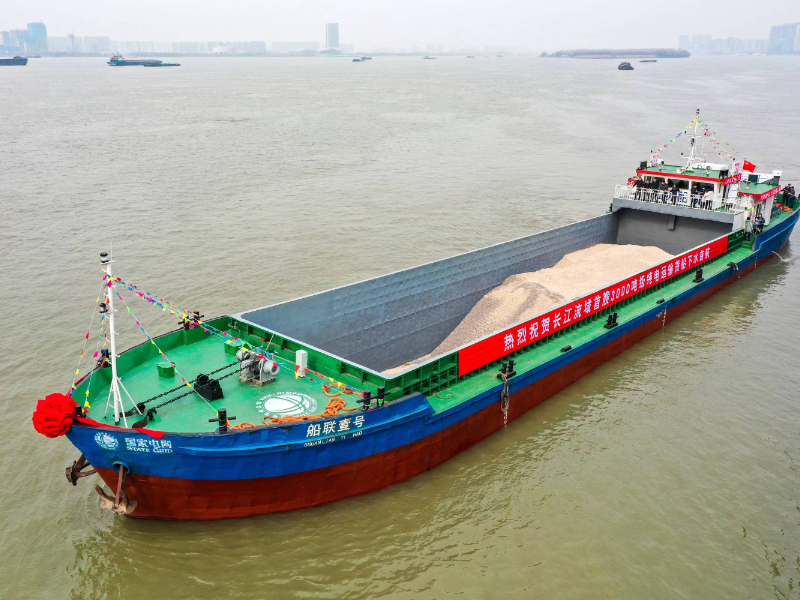
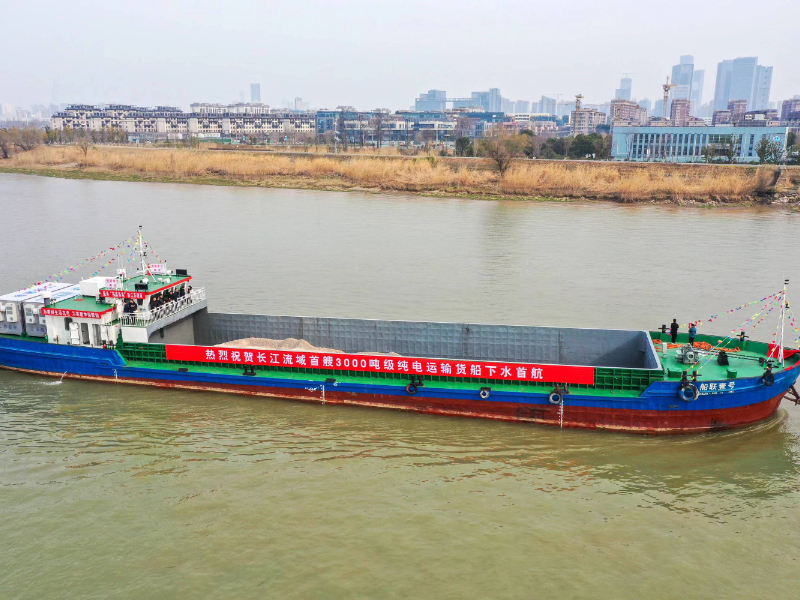
The "safety genes" of electric cargo ships are not only embodied in hardware design but also incorporated into the "soft power" of intelligent technology. Take a pure electric transport ship under the national "Electrification of the Yangtze River" strategic demonstration project as an example. Its intelligent system has achieved three major breakthroughs:
· Autonomous Obstacle Avoidance: Through the fusion of multiple sensors such as lidar, cameras, and millimeter-wave radar, it can construct a three-dimensional map of the waterway in real time. The AI algorithm can predict obstacles within 1 kilometer and automatically adjust the course to avoid collisions.
· Route Optimization: The system integrates data such as weather, hydrology, and traffic flow, combined with parameters such as the ship's draft and cargo load, to dynamically plan the optimal route. This reduces the navigation time in harsh environments and lowers safety risks.
· Remote Monitoring: Shipowners can view real-time data such as the ship's position, battery status, and equipment operation through mobile phones or computers. Once an abnormality is detected, they can remotely activate emergency procedures or even take over the ship's control, ensuring safety from thousands of miles away.
Industry Benchmark: Expansion from "Single-Ship Demonstration" to "Ecosystem Co-construction"
The safety of electric cargo ships relies on collaborative innovation across the industry chain. From a policy perspective, the government has introduced a series of supportive measures. For example, the "Implementation Opinions on Accelerating the Green and Intelligent Development of Inland Ships" issued by the Ministry of Industry and Information Technology explicitly requires "improving the battery powertrain capabilities and safety performance of ships." From an enterprise perspective, battery giants like CATL have collaborated deeply with shipyards to develop ship-specific batteries. Through four-level safety protection from "cells-modules-battery packs-systems," the probability of thermal runaway is reduced to one in a hundred million. From a regulatory perspective, maritime authorities have established a three-dimensional supervision system combining "electronic patrols + drone patrols + water patrols," conducting "one-ship-one-policy" safety assessments for electric cargo ships to ensure that every ship "sets sail with a certificate."
Green Future: A "Win-Win" of Safety and Environmental Protection
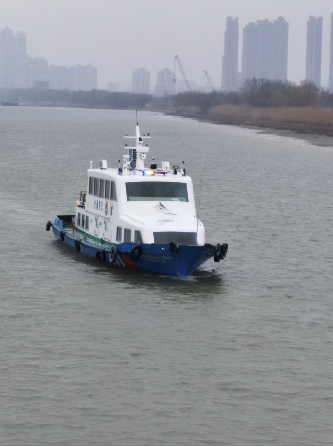
The safety of electric cargo ships is not only a respect for life but also a guardianship of the environment. Take the "Shanghai Ferry 11" and "Shanghai Ferry 12" as examples. After operating on the Huangpu River for more than a year, these two pure electric ferries have reduced carbon dioxide emissions by over 2,000 tons, equivalent to planting 100,000 trees. At the same time, due to the elimination of diesel engines, the onboard noise has been reduced by 40 decibels, allowing passengers to enjoy a "silent navigation" experience. This dual advantage of "safety + environmental protection" makes electric cargo ships the "preferred option" for the transformation and upgrading of inland shipping.
As the propellers of electric cargo ships cut through the blue waves, leaving behind a clean water trail, they also carry a promise of safety. From breakthroughs in battery technology to the application of intelligent systems, from the improvement of policy standards to industry chain collaboration, electric cargo ships are redefining the future of waterborne transportation with the concept of "full-lifecycle safety." Choosing electric cargo ships means choosing a reverence for life, a responsibility for the environment, and an expectation for the future. Let's join hands and sail towards a safer and greener tomorrow!
Contact Us
Email:
13813981680@139.com
Tel:
+86-17602544555
Address:
Building T1, Tianjijiang Lai-T1, Pukou District, Nanjing City